


Asian Community Development Corp. (ACDC), a Massachusetts nonprofit that creates and preserves affordable and vibrant neighborhoods in Chinatown and Greater Boston, celebrated becoming an official member of the NeighborWorks® America network last week. The event, held in conjunction with a groundbreaking for a new affordable apartment building with a ground-floor library – the first public library in Boston’s Chinatown since 1956 – marked the introduction of the fifth and final new affiliate in the NeighborWorks network for 2025.
The NeighborWorks network is a group of nearly 250 high-performing housing and community development nonprofit organizations that work to increase homeownership and financial capability in communities across the country. The organizations, which both create and preserve affordable housing, also enable residents to work together to enhance economic opportunities. Becoming a NeighborWorks affiliate is a rigorous process and can take months; the Congressionally chartered nonprofit only adds new members every few years. 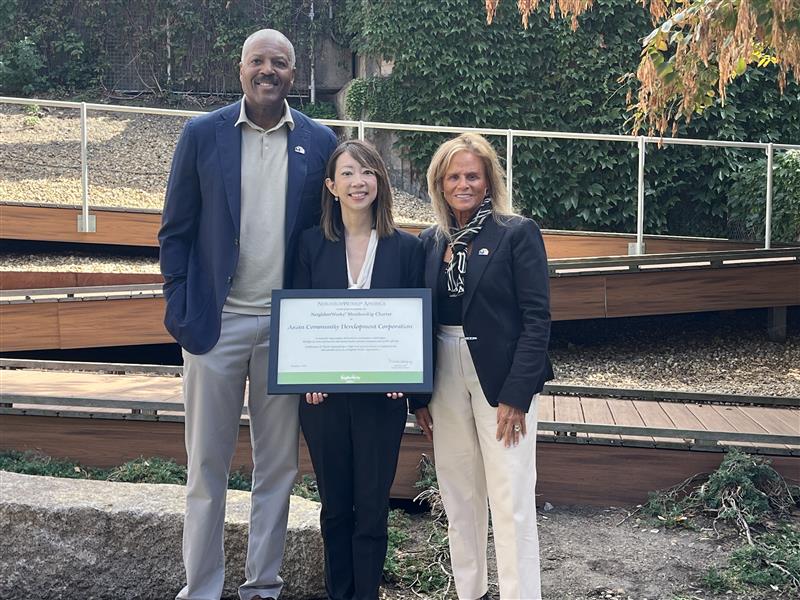
“It is such a pleasure to be here to celebrate both the groundbreaking of 55 Hudson Street and the chartering of Asian Community Development Corp. as one of the most recent new affiliates to the NeighborWorks America network,” said Joannie Straussman Brandon, Northeast Regional Vice President. “I congratulate Asian CDC for this development that brings much-needed affordable housing to Boston.”
The chartering ceremony, held minutes after staff turned over the earth to launch the Parcel R-1 at 55 Hudson Street construction project, was an opportunity to showcase the work of the long-time Boston organization.
Asian Community Development Corp. will create almost 300 new affordable rentals and condos in Greater Boston by 2027 – including the 110 residential units in the Parcel R-1 project. The mixed-use, mixed income building will include 66 Low-Income Housing Tax Credit rental apartment homes for families earning between 30% and 80% Area Median Income. An additional 44 of the spaces will become condominiums, bringing homeownership opportunities to the neighborhood.
All of the apartment homes will use sustainable, long-lasting materials and Energy Star appliances. Residents will be responsible for paying for electricity, heating and water and sewer, and using high-efficiency appliances will lower their utility costs, allowing them to save money, which they can then put into the economy in other ways.
Becoming a network member
“As a NeighborWorks member, ACDC is among a cohort of effective and established community organizations dedicated to serving our most vulnerable communities,” said Executive Director Angie Liou. The organization benefits from and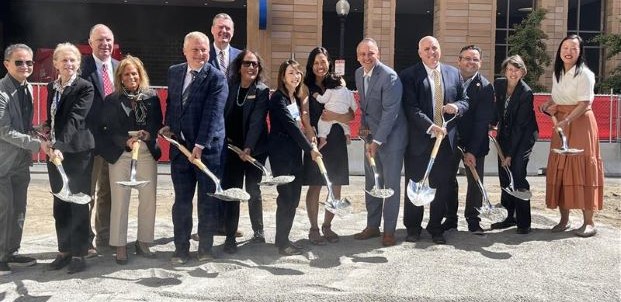 contributes to resource-sharing, which is essential in an ever-changing environment. “NeighborWorks’ professional development opportunities help our staff build on their skills and knowledge to better serve our constituents. The funding available to NeighborWorks members significantly increases ACDC’s capacity to sustain and grow its affordable housing work and community programs.”
At the same time, the organization is able to share best practices and lessons learned from developing and delivering culturally competent and language-accessible programs and services. Their programs, Liou said, help families find stability and thrive.
ACDC is the only nonprofit in Massachusetts to have HUD-certified housing counselors who are bilingual in English and Chinese. “Our counselors provide comprehensive support to help families on their journey to become homeowners,” Liou said. Since 2020, ACDC has helped over 100 families purchase their first home.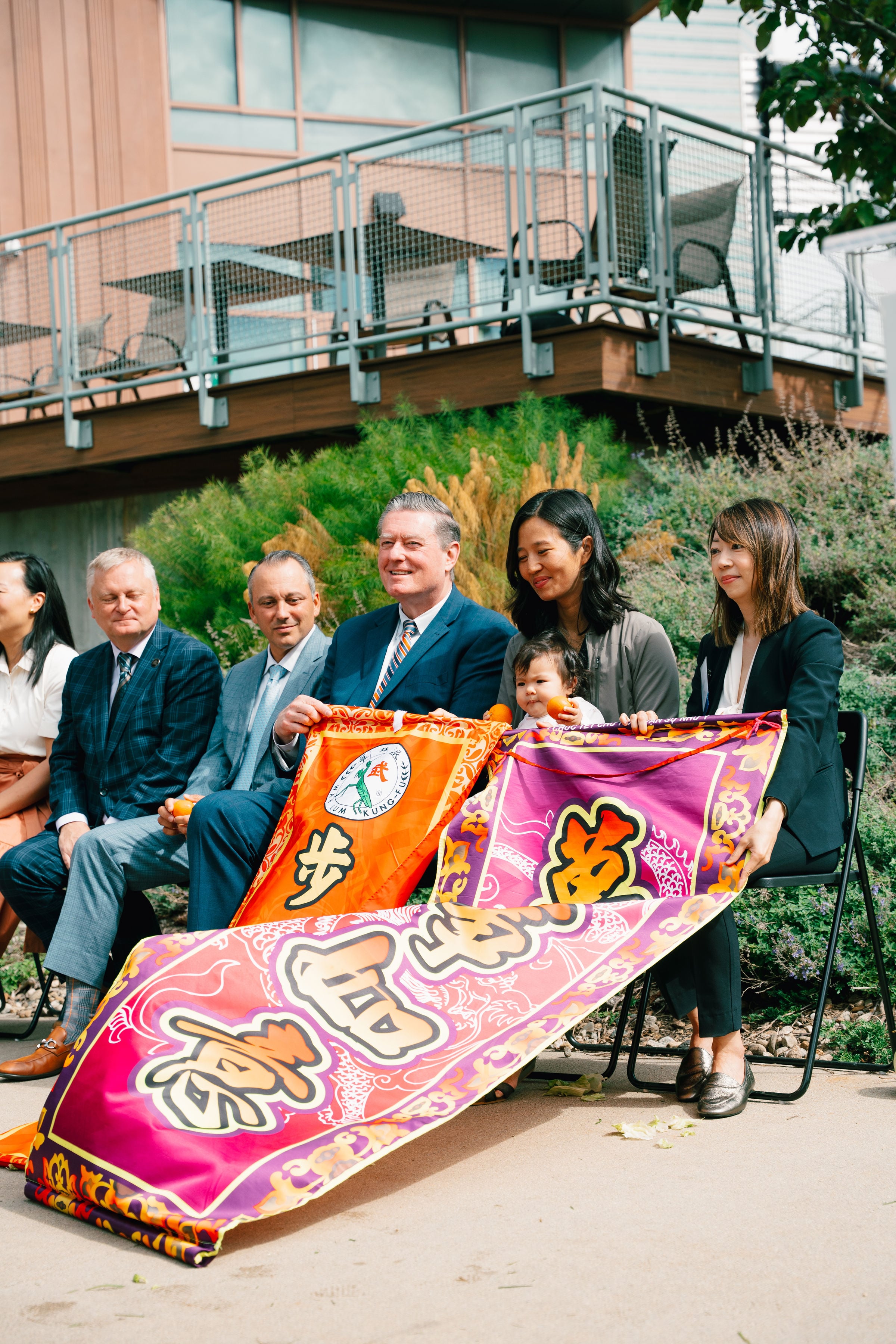
“Our holistic approach to community development builds on affordable housing and financial literacy to cultivate a sense of belonging and a youth and resident leadership pipeline in the neighborhoods we serve,” Liou explained. That belonging is achieved through collaborative arts and culture programs, which are often driven by the residents themselves.
Many of the families in ACDC’s financial literacy program have limited English proficiency. At the same time, area banks are short on bilingual employees. “The need for bilingual services extends beyond just bank tellers but includes loan officers and bank managers who are often in the best position to communicate a bank's financial products to customers,” Liou said. “There can be significant long-term effects for families who do not establish financial stability.”
One of those common effects? The inability to purchase a home. Without an established banking and credit history, it is difficult for these clients to secure a mortgage or other loan, including small business loans, student loans and credit cards. Credit history can also affect employment opportunities and rental housing opportunities, Liou said, adding that bad credit can lead to more expensive insurance premiums, higher interest rates, required security deposits for utilities, and unfavorable cell phone contracts. “In short, bad credit can easily cost a family thousands of dollars or more.”
There is a critical need for services that are geared linguistically and culturally to the Asian American community. Asian Community Development Corp.'s HUD-certified counselors provide homebuying services in Mandarin and Cantonese. They’ve been doing so since 2005, and the organization serves over 300 households per year.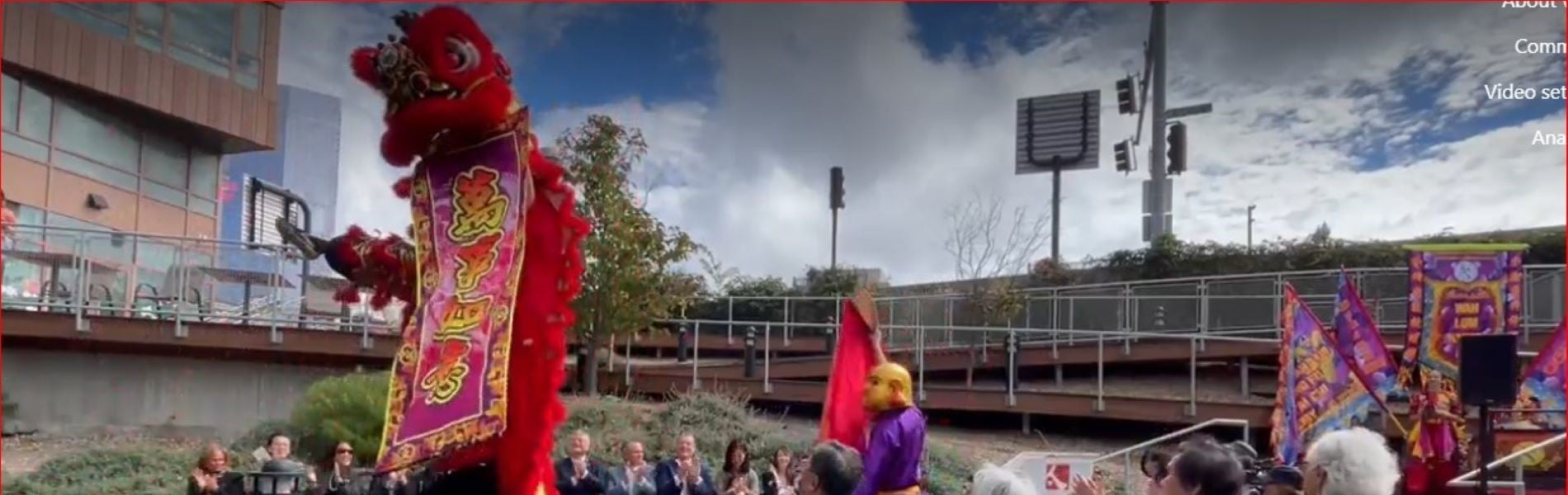
Straussman Brandon said that when NeighborWorks adds a new affiliate, “we assess if the organization has local support, breadth of vision, potential for production and commitment to serve a population in need. We’re delighted that ACDC made the cut.”
The ceremony included a Chinese dragon dance, to symbolize good fortune. Elected officials spoke during the ceremony, including Boston Mayor Michelle Wu, who focused on the new apartment homes.
“55 Hudson Street will bring new affordable housing units and a vibrant library branch to Chinatown, supporting residents with the resources they need,” she said. “As we work to make Boston a home for everyone, these new additions to Chinatown will ensure that Boston remains a city where our communities can thrive.”
Rep. Aaron Michlewitz, chairman of the House Committee on Ways & Means (D-Boston), also spoke. “It has never been a more critical time to be building more affordable housing units in the City of Boston, particularly in Chinatown,” he said, adding that the library fulfills a long promise to people in the neighborhood.
Liou said Asian Community Development Corp. was honored to lead this project in partnership with the City of Boston and the Chinatown community. “By creating affordable housing opportunities and a permanent home for the Chinatown Library, this development will complete the reknitting of the fabric of historic Hudson Street.”