


Shared equity housing makes homeownership possible for families priced out of the traditional market, while preserving affordability for the next buyer and the next generation. Through NeighborWorks® America’s Shared Equity Housing Initiative, NeighborWorks Lincoln (NWL) used training, professional support services, and planning resources to launch Nebraska’s first resident-led, citywide Community Land Trust (CLT) and build the policy infrastructure and organizational systems now guiding shared equity development across the state.
The support was made possible through a $12 million congressional investment that engaged more than 100 network organizations in expanding shared equity homeownership and generated a doubling of their portfolios over seven years. 
NeighborWorks Lincoln’s progress is featured in “Invested Once. Affordable Forever.” The Shared Equity Housing Initiative report, released this fall, outlines the impact of the program and the impact of shared equity.
An affordability problem in Lincoln
Homeownership was out of reach for many families in Lincoln, Nebraska. Recent home prices had climbed past $400,000, presenting an immovable barrier to homeownership for families earning below 80% of area median income. At the same time, the city’s 2020 Housing Action Plan projected a need for 30,000 new homes by 2035, including 5,000 affordable homes. The math wasn’t working, and the tools available to close the gap were limited.
For NeighborWorks Lincoln, a shared equity housing model offered a path forward by bridging the immediate affordability gap while ensuring that each subsidized home remained affordable to future buyers. The concept presented a sound solution, but it was almost entirely unknown in the region.
Local lenders and real estate agents weren’t familiar with shared equity housing, and there was no policy framework that recognized ground-leased properties. The knowledge gap had to be bridged before conversations about implementing shared equity housing models could take place.
Before a home could be placed into a community land trust, NWL needed to build the knowledge base from inside the organization, across the community, and within the state legislature.
From concept to competency
NWL’s entry into the Shared Equity Housing Initiative began with a planning grant and a clear assessment of the organization’s knowledge gaps. Through NeighborWorks America’s professional learning and support resources, staff and leadership built working knowledge of community land trust structures, resale formulas, ground lease agreements, and the long-term stewardship responsibilities that make a CLT program sustainable.
NeighborWorks America connected NWL with Julie Brunner, a consultant with deep expertise in shared equity program development.
She brought both knowledge and tools, including policy templates drawn from established programs, legal frameworks, governance models, and an institutional memory that takes years to build independently.
“When you’re new, you’re not thinking about 20 steps down the road,” explained Charlie Wesche, chief executive officer, NWL. “We had a lot of stuff that we could kind of fall back on, and through Julie’s expertise and experience, we knew we had solid reference material. It was just a matter of making it Lincoln-specific.”
The capacity to customize rather than invent from scratch accelerated NWL’s operational readiness and gave board members and staff the confidence to move forward on a model that might have stalled in the planning phase indefinitely without that scaffolding.
Many community members were receptive as they learned about the model. Yet just as many were skeptical or operating on misconceptions about what resale restrictions meant for their ability to build wealth.
Funding through the Shared Equity Housing Initiative supported NWL as it invested heavily in education at every level of the ecosystem.
 Lunch-and-learn sessions brought together city officials, lenders, and real estate professionals, and community forums opened the conversation to prospective buyers and neighborhood residents. The organization worked to reframe shared equity as a third option between renting and traditional homeownership. The effort created a collective understanding that shared equity presented an opportunity instead of a restriction by allowing buyers to build equity while keeping the home permanently affordable.
That community and stakeholder education created the conditions to launch Prairie Roots Community Land Trust. A $50,000 strategic planning grant from the initiative funded a board retreat that aligned priorities, deepened shared equity knowledge, and produced a strategic plan with clear unit targets and governance goals.
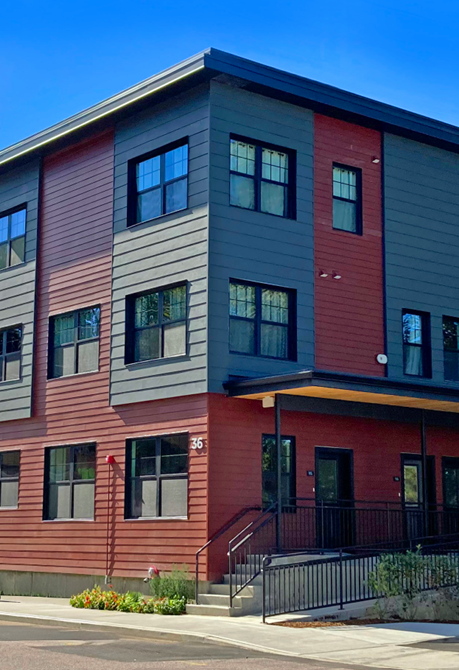
Established as a subsidiary of NWL with its own board, including homeowners, community development professionals, and crossover members from NWL’s board, Prairie Roots was designed to leverage NWL’s existing development capacity rather than build a parallel infrastructure from scratch. NWL builds homes and sells them to Prairie Roots, which holds the ground lease and stewards the portfolio. Instead of having to raise its own development capital or maintain a separate construction operation, Prairie Roots can focus on long-term stewardship, homeowner support, and portfolio management.
The result: Prairie Roots has grown to more than 40 permanently affordable homes in the three years since delivering its first home, with a goal of reaching 75 resale-restricted homes by 2027. That’s 75 families and individuals building equity in homes they can afford.
“If Prairie Roots was on its own, trying to develop its own capital and its own financing and subsidy sources, we’d maybe have one or two homes at this point,” said Wesche. “In hindsight, it looks like a stroke of genius because we have this longstanding organization that we’re taking that capacity and using it to feed this land trust model.”
Solving the policy problem: Becoming the state’s first tax educators
A subsidized home is only as affordable as its total carrying cost. NWL could reduce the purchase price of a home through the community land trust, but if homeowners were then taxed as though they owned a market-rate property, the affordability NWL had worked to create would disappear when the first tax bill arrived.
Under Nebraska’s property tax code, resale-restricted homes were assessed at full market value under standard tax rules, despite being sold at significantly below-market prices. Buyers of shared equity homes faced tax bills reflecting a value they could never realize through resale. If the tax burden could not be resolved, the model would not be workable.
Because Prairie Roots was the first resident-led, citywide community land trust in the state, NWL was not simply requesting a policy fix; it was teaching state tax assessors about community land trusts, how resale restrictions work, and why standard market-value assessment fundamentally misrepresents what a shared equity homeowner actually owns.
NWL and consultant Julie Brunner engaged directly with state legislators and tax officials to make that case. They ultimately secured an amendment that exempted resale-restricted properties from traditional market-value assessments. The change was integrated into a broader state tax bill addressing income-restricted properties, which eased its path through the legislature. Had it failed, the entire shared equity model in Nebraska would have been in jeopardy.
Instead, the result is a policy framework that did not exist before NWL built it, a framework that benefits not just Prairie Roots but every community land trust that follows in Nebraska.
Scale, leadership, and a statewide ecosystem
In addition to creating a path for more than 40 families to build generational wealth and paving the way for many more, the results of NWL’s investment in training and capacity building extend well beyond building homes. As a best practice in long-term stewardship, Prairie Roots sends homeowners annual letters updating them on their home’s current resale value under the CLT formula, building transparency and reinforcing trust in the model over time.
Partnerships with the Lincoln Housing Authority and for-profit developers have also extended the program’s reach into higher-opportunity, higher-cost neighborhoods that traditional affordable housing development rarely reaches.
Perhaps most significantly, NWL has become a resource for other organizations navigating the same path. Wesche presented at the 2026 NeighborWorks Training Institute in Chicago, Illinois, sharing lessons from the early planning phase. Organizations in Omaha, Nebraska, and across the NeighborWorks network have sought NWL’s guidance on governance structures, resale restrictions, and development models. The knowledge that NWL built with NeighborWorks America’s support is now flowing outward into a broader shared equity ecosystem.
Looking ahead
The initiative positioned NWL to receive a recent NeighborWorks America grant to join a cohort exploring New Markets Tax Credits and other innovative financing mechanisms for shared equity programs.
The goal is for the organization to move from niche developer status to realizing between unlocking $2 million to $20 million in new capital for shared equity housing.
Training helped make that possible. Specific, practical, hands-on support allowed a motivated organization to move from concept to competency, navigate Nebraska’s tax assessment policy as the state’s first resident-led, citywide community land trust, educate a community, and build a subsidiary land trust now positioned to reach 75 homes and beyond.
“Everything that we’ve done has really started from the NeighborWorks America investment,” said Wesche. “We’ve learned, we’ve established, we’ve grown, and now Prairie Roots on its own has multiple funders. It really stemmed from NeighborWorks America’s commitment and their involvement in getting that shared equity initiative passed.”